• Skip to main content
  • Skip to primary sidebar

Cognitive Computational Neuroscience

  • Home
    • CCN 2026 Organizers
    • Community Diversity, Equity, and Inclusion
    • Host a Future CCN Meeting
    • Privacy Policy
    • Code of Conduct
  • Account
    • Account Login
    • Create an Account
    • Account Home
  • Attend
    • Dates and Deadlines
    • Accommodations
    • Meeting Registration
    • Local Meetups
    • International Travelers
    • Travel Awards
    • Caregiver Awards
    • Local Food Options
    • Visit New York
    • Venue Information
  • Events
    • Schedule of Events
    • Community Events
    • Back2NY Event
    • Mind Matching
    • Community Networking Lunch
    • Transmitter Mentorship Program
    • Early-Career Faculty Social Lunch
    • Satellite Events
    • Social Event
    • Growing Up in Science
    • Distributed Bar Crawl
  • Presentations
    • Keynote Lectures
    • Keynotes & Tutorials
    • GACs
    • Contributed Talks
    • Poster Sessions
    • Search Papers
  • Submissions
    • Talk Presenter Instructions
    • Poster Presenter Instructions
    • Call for Papers
    • Call for Community Events
    • Call for GACs
    • Call for Keynotes & Tutorials
  • Sponsor
    • 2026 Sponsors
    • 2026 Exhibitors
    • Sponsorship Opportunities
  • Archive
    • CCN 2025
    • CCN 2024
    • CCN 2023
    • CCN 2022
    • CCN 2021
    • CCN 2020
    • CCN 2019
    • CCN 2018
    • CCN 2017
    • GACs
  • Contact Us

Uncategorized

Home

CCN2026 Banner Logo

9th Annual Conference
Cognitive Computational Neuroscience
August 3-6, 2026
New York University, New York

Thank You for Attending CCN 2026

The 9th annual conference on Cognitive Computational Neuroscience has concluded. Thank you to everyone who attended, presented, or otherwise participated. This year's meeting was made possible by the hard work of the Organizing Committees. A special thanks to Our Sponsors.

You can request a Certificate of Attendance from your CCN Account.

Session recordings are now available on YouTube.

Join Us for CCN 2026 in New York!

The 9th annual conference on Cognitive Computational Neuroscience will be held at New York University from Monday, August 3 through Thursday, August 6, 2026.

About the Conference

CCN is an annual forum for discussion among researchers in cognitive science, neuroscience, and artificial intelligence, dedicated to understanding the computations that underlie complex behavior.  The conference began in 2017, with a goal to deepen interactions between these disciplines and to discover ways that the communities can benefit one another and leverage each other’s successes, articulated in this TICS commentary paper.

The conference is primarily single-track featuring keynote speakers and oral presentations.  Paper submissions are presented as posters with a few additionally selected for oral presentations. Community-proposed programming happens in single-track and parallel sessions, including "GACs", "K&Ts", and other community events. Generative Adversarial Collaborations (GACs), are symposia designed to clarify theoretical debates and scaffold forward progress. Keynote-and-Tutorial presentations (K&Ts) foster science and skill-building, presenting cutting-edge science as a talk, followed by the code and a tutorial of how to execute those methods. Open events are designed to welcome all creative ideas for community building, skill building, science exchange, mentorship and career development.  We aspire to have an active, open, and responsive culture to meet the needs of this dynamic growing field.

We encourage participation from experimentalists and theoreticians investigating complex brain computations in humans and animals. CCN will draw researchers that address challenges including (and not limited to):

  • Understanding brain information processing underlying real-world tasks that involve natural stimuli, rich knowledge, complex inferences, and behavior
  • Measuring and expanding the representational competencies of modern AI systems
  • Understanding commonalities and differences between biological and artificial intelligent systems
  • Using techniques from machine learning and artificial intelligence to model brain information processing, and, conversely, incorporating neurobiological principles in machine learning and artificial intelligence
  • Mechanistic interpretability of deep neural network models and the science of deep learning
  • Revealing principles of brain connectivity and dynamics at multiple scales
  • Using psychophysical techniques to relate sensory inputs to behavioral responses
  • Developing cognitive- or neural-level models of perception, cognition, emotion, and action
  • Representation learning and representational alignment

2026 Keynote Speakers

doris_pic_office_cropped

Doris Tsao
UC Berkeley

Lake

Brenden M. Lake
Princeton University

Fyshe_headshot_cropped

Alona Fyshe
University of Alberta

Kenji_Doya_profile

Kenji Doya
Okinawa Institute of Science and Technology
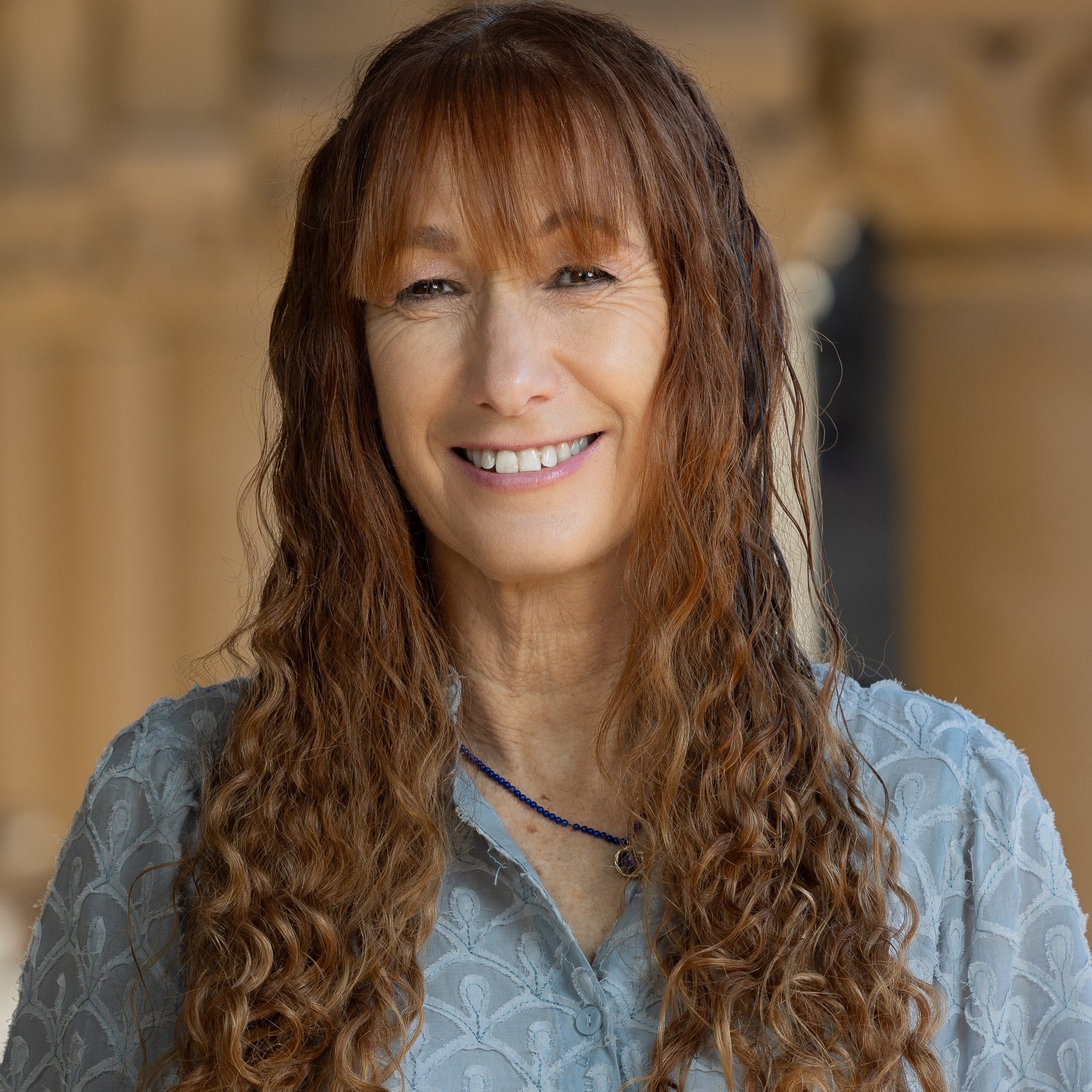
Headshot

Kalanit Grill-Spector
Stanford University
About CCN

About CCN

Cognitive Computational Neuroscience (CCN) is an annual scientific conference for neuroscientists characterizing the neural computations that underlie complex behavior. The goal is to develop computationally defined models of brain information processing that explain rich measurements of brain activity and behavior. To explain complex cognition and behavior, such models will ultimately have to perform feats of intelligence such as perception, internal modelling and memory of the environment, decision-making, planning, action, and motor control under naturalistic conditions.

Why is this conference necessary?

Cognitive science has developed computational models at the cognitive level to explain aspects of complex behavior. Computational neuroscience has developed neurobiologically plausible computational models to explain neuronal responses to sensory stimuli and certain low-dimensional decision, memory, and control processes. Cognitive neuroscience has mapped a broad range of cognitive processes onto brain regions. Artificial intelligence has developed models that perform feats of intelligence. Building on these advances, we now need to put the pieces of the puzzle together. CCN is unique in its focus on the intersection between these fields, where comprehensive brain-computational models are beginning to explain high-level neural representations and dynamics, and complex feats of intelligent behavior that involve rich world knowledge.

What topics are appropriate for this conference?

We encourage participation from experimentalists and theoreticians investigating complex brain computations in humans and animals. CCN will draw researchers that address challenges including:

  • Understanding brain information processing underlying real-world tasks that involve natural stimuli, rich knowledge, complex inferences, and behavior
  • Revealing principles of brain connectivity and dynamics at multiple scales
  • Developing cognitive- or neural-level models of perception, cognition, emotion, and action
  • Using brain and behavioral data to test such models
  • Understanding commonalities and differences between biological and artificial intelligent systems
  • Using techniques from machine learning and artificial intelligence to model brain information processing, and, conversely, incorporating neurobiological principles in machine learning and artificial intelligence
  • Measuring brain activity at multiple spatial scales in humans, nonhuman primates, and other animals
  • Using psychophysical techniques to relate sensory inputs to behavioral responses

Conference Format

The conference has a single-track format that includes opportunities for presentation of new research, discussions, and tutorials. To make the content of the conference available to the broader neuroscience community, we videotape and post talks to a public website that includes infrastructure for commentary and discussion.


News

Submission of Papers will open February 15.

SNL & MIT Press Launch Neurobiology of Language

SNL and MIT Press Launch Neurobiology of Language


The Society for the Neurobiology of Language and the MIT Press are pleased to announce the launch of Neurobiology of Language. This open access journal will publish interdisciplinary articles addressing the neurobiological basis of speech and language. Steven L. Small, Dean of the School of Behavioral and Brain Sciences, University of Texas at Dallas, and Kate E. Watkins, Professor of Cognitive Neuroscience at the University of Oxford, will serve as Editors-in-Chief.
Neurobiology of Language will publish primarily research articles, but also encourages submissions of articles reporting on new methods and data, as well as reviews and perspectives. Neurobiology of Language is an open access publication, and all content will be freely available to readers across the globe.
The editors are now accepting submissions. The inaugural issue of Neurobiology of Language will appear in 2020. More information about the journal and how to submit articles is available at http://mitpressjournals.org/nol

Renew Your SNL Membership

[et_pb_section][et_pb_row][et_pb_column type=”4_4″][et_pb_text]

It’s Time to Renew Your Membership!

Your SNL membership expired on December 31st. The Society for the Neurobiology of Language supports studies of the anatomic and physiologic basis for language. Currently, SNL has close to 1000 members, representing a wide range of language research areas. 50% of our members come from outside the United States, representing more than 25 countries. Being an SNL member has many benefits, including voting privileges in Society elections, substantially reduced registration rates to the Annual Meeting, and the ability to post job and conference listings in the SNL Newsletter. Please consider renewing today. To renew your membership, log in to your SNL Account. From your account home page, click “Renew My Membership.” For more information about becoming an SNL member, go to Membership.[/et_pb_text][/et_pb_column][/et_pb_row][/et_pb_section]

Proposals for Future SNL Meeting Venues Now Being Accepted

Call for Proposals for Future SNL Meeting Locations

The Society for the Neurobiology of Language welcomes applications to host future meetings to be held each year between September 15th and November 15th.

Proposals for the 2020 and 2021 meetings will be discussed by the SNL Board at the August meeting in Québec, so please submit applications or letters of interest before the upcoming meeting.

We seek to hold our meetings in cities that are of interest to our members (e.g., for their cultural, historic, geographic, or linguistic characteristics). The host city should be accessible from major cities worldwide.

We require a local organizing committee headed by a member of the Society who will work with the SNL Meeting Organizer to finalize meeting arrangements. SNL is interested in receiving applications for the United States, Europe, and other countries. Click here to submit an application.

All proposals will be reviewed by the SNL Board who will contact applicants for further information, as needed. If you have questions, please ">Contact Us.

New: Student Bar Hopping Event!

New: Student Bar Hopping Event!

Join Helsinki students on a tour of local bars, while enjoying “Art Goes Kapakka” (a free art event).

Meet in the lobby on Wednesday, August 21 at 7:00 pm — immediately following Poster Session D and SNL Social Hour.

The first drink is FREE!

Free Helsinki Public Transportation Tickets!

Free Public Transportation for all SNL Attendees!

Helsinki Region Transport (HRT/HSL) will be supporting SNL 2019 by offering free public transportation for all meeting attendees. The 3-day tickets are valid from August 20 – 22 and provide transportation throughout the greater Helsinki area, including the neighboring cities of Espoo, Vantaa and Kauniainen. Detailed information about public transportation in Helsinki can be found on the HSL website. In addition, an HSL App is available for Android and iPhone devices. The transportation tickets will be available with your meeting materials.

SNL 2019 Meeting Program Now Available for Download!

Program Download

Click on the image below to download a PDF of the SNL 2019 Program, including the full text of all abstracts.


SNL 2019 Program (PDF, 5.3 MB, 268 pages)

Announcing the SNL 2019 Poster and Slam Assignments

Announcing the SNL 2019 Poster and Slam Assignments

We are pleased to announce that the Poster and Slam sessions and assignments for SNL 2019 are now available:

Poster Sessions

Slam Sessions

Slide Sessions

Also, see the Schedule Overview on the SNL website for a comprehensive outline of the program with links to in-depth descriptions of Keynote sessions and Symposia.

We’re looking forward to seeing everyone at SNL 2019!

Registration Open for the Student & Postdoc Career Development Panel

Register Now for the Student & Postdoc Career Development Panel

SNL is pleased to announce a Student and Postdoc Career Development Panel at the 2019 Meeting. The Career Development Panel will provide our student and postdoc members with the opportunity to ask five early career researchers about their experiences in the academic and non-academic job markets. Our current student and postdoctoral representative, Angela Grant, will moderate the session and get the ball rolling with some prepared questions. The panel will feature Annika Hultén, Laurel Lawyer, Qingqing Qu, Benjamin Schloss, and David Thornton.

The event will take place on Wednesday afternoon from 12:30 – 2:00 pm in the Balcony Level Foyer. Lunch will be provided. For more information about the event and panelists, go to Student and Postdoc Event.

Due to space restrictions, we ask that students and postdocs interested in attending please REGISTER in advance.

Currently there is a wait-list for this event, but we encourage you to register and secure your position. Should additional space become available, we will contact wait-listed students and postdocs in the order in which they registered.

Next Page »

Primary Sidebar

News

Submission of Papers will open February 15.

Copyright 2026 CCN  Contact us at