Growing Up in Science
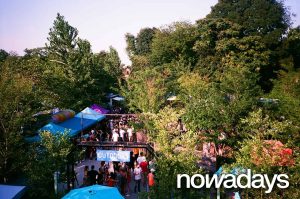
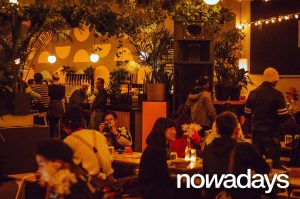
Wednesday, August 5, 7:45 – 9:15 pm, Offsite - Nowadays
The very popular Growing Up in Science (GUIS) event is back in New York! This year, two early-career researchers will share the stories behind their paths in science - the choices they've made, the challenges they've faced, and the people and experiences that have helped shape them along the way. By opening up about both the highs and lows of life in research, we hope to create a space where everyone can feel a little more connected and a little less alone in their own scientific journey.
The conversation will be chaired by GUIS co-founder Weiji Ma.
Rodrigo Carrasco Davis is a Postdoctoral Researcher at Princeton Neuroscience Institute.
Bria Long is an Assistant Professor in the Department of Psychology at the University of California, San Diego.
Weiji Ma is a Professor of Neural Science and Psychology at New York University.
Join us on Wednesday, August 5, from 8:00–9:00 PM, alongside the Social Event.
You must purchase a social event ticket to attend.
Rodrigo Carrasco-Davis
Official Story: Rodrigo Carrasco-Davis earned his undergraduate and master's degrees in electrical engineering with minors in physics, from Universidad de Chile. There, he took part in research projects spanning physics, astronomy, and machine learning, dedicating most of his undergraduate work to applying machine learning models to detect supernovae in astronomical data. He then changed fields, moving into neuroscience for his PhD at the Gatsby Computational Neuroscience Unit, University College London, where he worked with Andrew Saxe. He is currently a Presidential Postdoctoral Research Fellow at the Princeton Neuroscience Institute, working with Jonathan Cohen. His current research focuses on mathematical models of learning systems, meta-learning, and replay models.
Unofficial Story: Rodrigo was born in Santiago de Chile in 1992. He grew up in a very privileged family, where they shared long conversations at dinner about their problems, politics, and religion, among many other topics. A relevant aspect of these discussions was the importance of education, probably due in part to his grandfather, and to his mother's job at an NGO that assisted teachers in rural parts of Chile. This family privilege did not correspond to their financial situation, so Rodrigo went through the public education system in Chile, where kids had to "survive" to finish their mandatory education, enduring and enjoying the chaos of 45 male teenage students packed into a small dantesque classroom for 4 years. During elementary school and high school, Rodrigo went through different phases, wanting to become a medical doctor, then a musician, then he wanted to do something related to math, all of these changes influenced by particular events and people along the way.
He started his undergrad by doing common courses for physics and engineering at Universidad de Chile, understanding that his problem was not to figure out what he likes, but rather that he likes too many things and doesn't understand that he can't do it all. Rodrigo was a hardworking student without the ability to prioritize the important things (it seems like he is getting better), and ended up struggling with courses, getting into weird project rabbit holes, and letting his studies collide with his personal life (a common theme in his life), making his time at university tough but fun. Undergrad also included a side quest exchange program in the US, where the idea of spending time abroad for a PhD was planted in his head. His main research during undergrad and graduate studies was applying machine learning methods to astronomy, which sparked the question of how and why neural networks work. Naively, he decided to switch to neuroscience, thinking that people studying the brain might have an answer to his questions. Fortunately, they didn't.
Thanks to the wonderful researchers who nurtured him to become a scientist, the encouragement from his family and friends, and the incredible support from his (at the time) wife, Rodrigo and she moved to the UK and he started a PhD in theoretical neuroscience at the Gatsby Computational Neuroscience Unit at UCL.
The time spent in the PhD was very difficult for a number of reasons. Some of these struggles included financial difficulties during his studies, insecurities about his intellect relative to other people, not being able to join his family in Chile amid health problems while he was in the UK, and, perhaps hardest of all, the two-body problem with his wife at the time, which, unfortunately, they didn't manage to solve. Some of these issues caused, sometimes brought on by himself, periods of non-productive workaholic states, anxiety, and severe depression, to the point where he was completely detached from a normal life. Some other side failures include his first research talk, which was unanimously and objectively terrible, getting roasted and denied a collaboration by a PI because he wasn't smart enough, and completely failing a PhD interview.
Fortunately, Rodrigo thinks free will does not exist, which makes him very grateful for the roll of the dice that has given him access to a loving family, friends and partners, and great mentors who shaped him and his living experience into something he learn from, enjoy and overcome (most of the time). In the case of the PhD experience in particular, this took the form of a great PhD advisor who just happened to be there, without him knowing it when he accepted the offer, and other PhD students, from whom Rodrigo took inspiration, reminding him why he was doing research and why he wants to stay in academia.
Rodrigo is currently doing a postdoc at Princeton, which he is enjoying very much, especially a new aspect of it: mentoring and working alongside new students. Because of this, and some other reasons, he is planning, although open to opportunities ;), to go back to Chile and become a professor there, where he hopes to mentor and support the next generation of Chilean scientists, and perhaps help improve the public's perception of science, pushing back against the anti-scientific discourse that, unfortunately, is not a threat only in Chile but in other places too. He is basically clueless about what he is doing or where it's going, yet despite this (and despite the dystopian direction that history is taking), Rodrigo is excited about the future.
He is eager to share some of this in the Growing Up in Science event, and hopes that this can be useful to someone in the audience. More importantly, if you read all the way here, he appreciates the time you took to do so. Also, if you think discussing some of this with Rodrigo would help you, he would be happy to chat with you.
Bria Long
Official Bio: Bria Long received her B.A. in Human Biology at Stanford University, her M.S. in Cognitive Science from the Cogmaster program at the École Normale Supérieure in France, and her Ph.D. in Psychology at Harvard University, working with George Alvarez, Talia Konkle, and Susan Carey. She spent seven years as a postdoctoral research fellow working with Michael C. Frank at Stanford University in the Language and Cognition lab, where she was supported by an NSF SBE Postdoctoral Fellowship and an NIH K99/R00 Pathways to Independence Award. She is currently an Assistant Professor of Psychology at the University of California, San Diego, where she directs the Visual Learning Lab. She is broadly interested in the development of perception and cognition. Her work focuses on using computational tools to characterize children’s early learning environments and evolving representations of the visual world.
Unofficial Bio (long): Bria was a shy kid who grew up outside of Atlanta, GA, where she spent most of her time playing piano in her mom’s piano studio, reading science fiction, and making art. She liked learning languages, and she chose colleges to apply to based on the strength of their Japanese language programs, and she entered into college thinking she might try to be an architect. Or something.
But after thumbing through the course catalog her freshman year, she saw an ad for “Birds to Words” class in language development co-taught by Anne Fernald and Michael Ramscar. Somehow, she was allowed to enroll in this class, despite the fact that she definitely hadn’t met the pre-requisites. She stuttered, struggled, and straggled through her first discussion section, but a kind TA simply suggested some background reading to catch up. She then found a position in Lera Boroditsky’s lab because Caitlin Fausey really needed a Japanese speaker to help her with her dissertation, and Bria could speak Japanese. About a year later, Bria also decided that it would be nice to go to France to study abroad with her friends, especially since she liked art and pastries, which was so enjoyable that she decided her new life plan was simply to move back to France. She applied to be an English teacher in France, and, simultaneously, to the Fulbright Scholarship program. A contact in the Fulbright office knew Emmanuel Dupoux, and after a few emails Bria discovered that he was conducting research on how French infants perceived Japanese phonology and wrote a proposal to work in his lab. Apparently, this was good enough to be funded, landing Bria a full-time research position in Paris, where she had way too much academic freedom and broad interests, resulting in three failed projects that weren’t really related. But she also discovered that she liked science enough to keep doing it.
She then went ahead and applied for PhD programs both in France and back home, and was surprised and excited to find out you could get paid to get your PhD, as she had to take out loans to stay in France for her master’s degree. During her interviews, she ended up having an offhand conversation with George Alvarez in the Vision Lab at Harvard—and because it wasn’t technically an interview, she was pretty relaxed and had a lot of fun talking about science. George invited her to join his lab, and after very little deliberation, she decided to start her Ph.D. at Harvard and then ended up spending six years studying mid-level vision.
But joining the Vision Lab as a developmentalist meant that from day one Bria struggled to feel like she belonged. And while her programming skills were coming along, she’d never had a formal CS class. Plus, her first-year project ideas were a dead end and she had to ask George for help finding something new to work on. It didn’t feel like a great start, especially when there were other students around with high-profile papers. Luckily, there were many great postdocs around (Justin Jungé, Tim Brady, Viola Stoermer, Maryam Vaziri-Pashkam) who helped her find her way. Eventually, some projects started working, she knew how to program in Matlab, and she had a lot of fun learning new methods, which turns out to still be one of her favorite things.
Towards the end of her PhD, she thought about just doing more computational fMRI work, but she realized she did really want to study development again, and in fact had been hanging out in Susan Carey’s lab this entire time (now of course as a vision scientist imposter in a developmental lab). After many emails and meetings, she convinced Mike Frank—who had rejected her application for graduate school—to sponsor her postdoc grant application, even though she knew little about language development and had spent six years studying vision.
Bria’s postdoc years were some of the best and the most challenging years so far. The science was incredibly fun and invigorating—Bria really liked getting to explore new topics and got to learn even more new methods. But she decided she would regret not having a family more than she would regret not getting an academic job, and decided to have kids while her parents lived close by. Luckily, the same Frenchman she met in college turned out to be a great partner who was willing to move around the world for her career. She tried to time her pregnancies with the academic job market, which turned out to be impossible, as pretty much anyone could have told her. She was nauseous, puking, pumping, zooming, or masking (or some combination) through almost all of her faculty interviews. COVID did not make having kids and finding a job at the same time any easier. She felt like academia just wasn’t made for moms (and to be honest, she’s not wrong—we can do better).
At the beginning of year six of her postdoc, she had pretty much had it with academia and feeling stuck in a yearly cycle of job market angst. In truth, she had considered jumping ship for industry almost every year. Plus, in her mid-thirties, she was making less as a postdoc than she was paying in childcare for two kids. She also realized she really didn’t want to live anywhere besides California because she wanted to live near family. So, on her last year on the job market, she only applied to schools that she really loved in California. She didn’t think that she should apply to the “computational” job at UCSD but was convinced by her friends and mentors that in fact she does use lots of computational models.
Bria is now an Assistant Professor at UCSD, and it is quite literally her dream job, especially since the Pacific Ocean is a few blocks away from her office. She can still remember what she was eating when she got the phone call that she was getting a job offer (mushroom risotto, which her kids were not pleased about at the time). Today, Bria is incredibly grateful. She feels perpetually surprised that everyone in her lab wants to work on the same topics that she does. She still feels like she isn’t computational enough despite consistently using many computational methods, and still breaks a sweat every time she has to lecture on methods to new graduate students. But she has a wonderful writing group with other new faculty that helps her keep it all in perspective. Sometimes, she misses a talk for a school event, or a school event for a talk. And she is still glad that she chose to have her children when she did—they are her greatest joy and inspiration.