• Skip to main content
  • Skip to primary sidebar

Cognitive Computational Neuroscience

  • Home
    • CCN 2026 Organizers
    • Community Diversity, Equity, and Inclusion
    • Host a Future CCN Meeting
    • Privacy Policy
    • Code of Conduct
  • Account
    • Account Login
    • Create an Account
    • Account Home
  • Attend
    • Dates and Deadlines
    • Accommodations
    • Meeting Registration
    • Local Meetups
    • International Travelers
    • Travel Awards
    • Caregiver Awards
    • Local Food Options
    • Visit New York
    • Venue Information
  • Events
    • Schedule of Events
    • Community Events
    • Back2NY Event
    • Mind Matching
    • Community Networking Lunch
    • Transmitter Mentorship Program
    • Early-Career Faculty Social Lunch
    • Satellite Events
    • Social Event
    • Growing Up in Science
    • Distributed Bar Crawl
  • Presentations
    • Keynote Lectures
    • Keynotes & Tutorials
    • GACs
    • Contributed Talks
    • Poster Sessions
    • Search Papers
  • Submissions
    • Talk Presenter Instructions
    • Poster Presenter Instructions
    • Call for Papers
    • Call for Community Events
    • Call for GACs
    • Call for Keynotes & Tutorials
  • Sponsor
    • 2026 Sponsors
    • 2026 Exhibitors
    • Sponsorship Opportunities
  • Archive
    • CCN 2025
    • CCN 2024
    • CCN 2023
    • CCN 2022
    • CCN 2021
    • CCN 2020
    • CCN 2019
    • CCN 2018
    • CCN 2017
    • GACs
  • Contact Us

Keynote

CCN 2026 Transmitter Mentorship Program

CCN 2026 Transmitter Mentorship Program

We are excited to announce a brand new CCN mentorship program sponsored by The Transmitter. This initiative connects early- and mid-career academics with experienced mentors to support career exploration both within and beyond academia. The program is designed to foster a more inclusive and supportive CCN community through structured and flexible mentoring and networking.

How the program works

  • Participation is open to individuals at all career stages
  • You may sign up as a mentor, mentee, or both
  • Selected participants commit to active engagement and preparation
  • Attend an in-person mentorship lunch at CCN 2026 (sponsored by the Transmitter)
  • Mentoring takes place in 4 structured mentor meetings (one on one or two) over 12 months.

Of course, we hope that mentees and mentors will develop their own relationship outside of the program’s structured elements. Our hope is to provide a gentle reminder to continue conversations beyond the in-person conference.

Each mentor will be paired with 1–2 mentees. Space is limited, and selection is based on alignment, clarity of goals, and commitment. We explicitly encourage early-career researchers, particularly those in career transition stages, to apply.

We also warmly encourage faculty members to participate as mentors. In addition to the structured mentor–mentee meetings, we will organize informal mentor meetups at CCN 2026 to foster peer-to-peer exchange, reflection, and community building among faculty participants.

Applications for The Transmitter Mentorship Program closed on June 1.
Partner Prospectus: CCN 2026 New York

Sponsorship Opportunities

The Cognitive Computational Neuroscience conference is excited to announce our 9th annual conference will be held at New York University from August 3-6, 2026.

To fill the growing need for interaction and collaboration among AI, cognitive science, and neuroscience, the CCN conference was started in 2017, and it has seen steady growth over the last few years. We expect more than 650 attendees from around the world. CCN attracts scientists who use AI models to better understand the human mind and brain as well as engineers who use insights from cognitive science and neuroscience to build more human-like AI.

We are currently seeking partners who are committed to enhancing scientific exchange within this community.

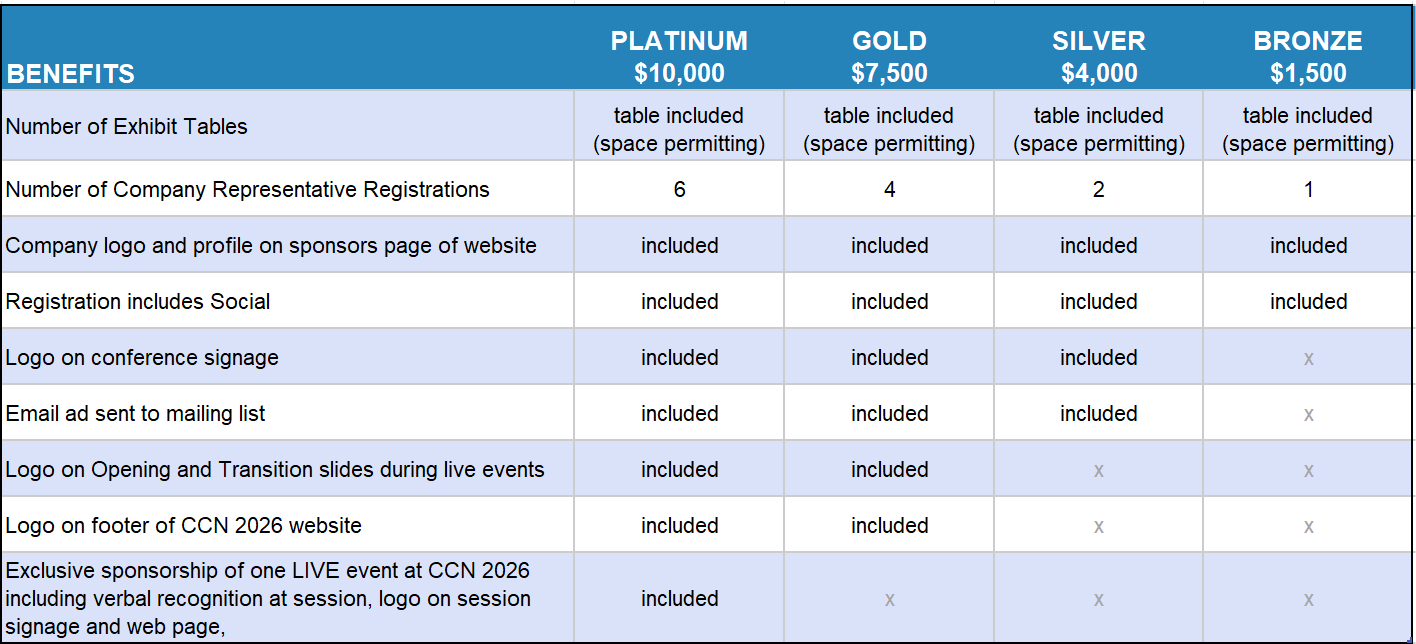
We offer several sponsorship packages (below) or would be happy to tailor a package to suit your needs and goals.

Sponsorship Levels

Keynote Lecture: Alona Fyshe

Keynote Lecture: Alona Fyshe

Wednesday, August 5, 8:30 – 9:30 am, Skirball Theater

Play YouTube Recording

Alona Fyshe, University of Alberta
Associate Professor of Computing Science and Psychology

Alona Fyshe is an Associate Professor with a joint appointment in the Computing Science and Psychology Departments at the University of Alberta.  She is a fellow at the Alberta Machine Intelligence Institute (Amii) and holds a Canada CIFAR AI Chair.  Alona received her BSc and MSc in Computing Science from the University of Alberta, and a PhD in Machine Learning from Carnegie Mellon University.

Alona uses machine learning to analyze brain images collected while people read text or view images, which allows her to study how the human brain represents meaning.  Alona also studies how computer models learn to represent meaning when trained on text or images.  Alona leverages the connections between computer representations of meaning and those found in the human brain in order to advance our understanding of the brain, and the state of the art in machine learning.

Presentation title: Can a (stochastic) parrot understand you? Contemplating intelligence in the era of LLMs

Keynote Lecture: Doris Tsao

Keynote Lecture: Doris Tsao

Monday, August 3, 11:45 am – 12:45 pm, Skirball Theater

Play YouTube Recording

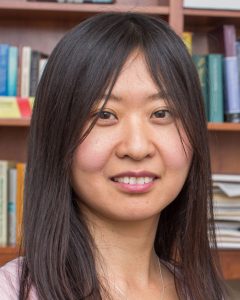
Doris Tsao, UC Berkeley
Chief Scientist, Astera Neuro and Professor, UC Berkeley

Doris Tsao is the Chief Scientist for Neuro at Astera and Professor at UC Berkeley in the Neuroscience Department. She is known for elucidating the anatomical anatomy and coding principles of the primate face-processing system and for demonstrating its integration into a broader map of object space. Her recent theoretical work proposes a topological account of how object representations emerge in the visual system. She now aims to build on these advances to develop a deeper understanding of perception and consciousness through large-scale, causal manipulation of neural circuits.

Presentation Title: Representing the visual world: from faces to consciousness


Keynote Lecture: Kalanit Grill-Spector

Keynote Lecture: Kalanit Grill-Spector

Thursday, August 6, 9:30 – 10:30 am, Skirball Theater

Play YouTube Recording

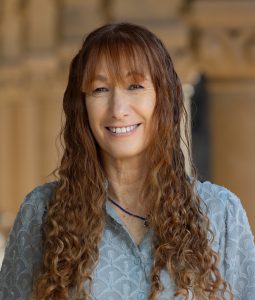
Kalanit Grill-Spector, Stanford University

Susan S and William H Hindle Professor, Department of Psychology, Wu Tsai Neurosciences Institute

Kalanit Grill-Spector is the Susan S and William H Hindle Professor in Psychology and the Wu Tsai Neurosciences Institute at Stanford University. She received her PhD from the Weizmann Institute of Science in Israel and was a postdoctoral fellow in Brain and Cognitive Sciences at MIT before joining Stanford University. At Stanford, she has served as director of the graduate studies in the Department of Psychology from 2017-2021, and the Chair of the Department of Psychology from 2021-2024.

She is renown for foundational discoveries on the functional organization of the human ventral visual stream, the development of the visual system from infancy through adulthood, and the creation of biologically inspired topographic deep neural networks. Her pioneering research established key principles governing the organization of the human ventral visual stream, revealing how the brain represents faces, objects, places, and words and how this neural activity relates to perception. Her developmental research has transformed our understanding of how the human visual system develops by linking changes in cortical function, microstructure, and white matter connectivity from infancy through adulthood, revealing which features of visual cortex are present at birth and which emerge through development and experience. More recent work with her students and in collaboration with Daniel Yamins has developed topographic deep neural networks that accurately predict the organization of the visual cortex, from fine-scale structure such as orientation columns in V1 to the large-scale organization of multiple visual streams, providing a unified computational framework for understanding how cortical maps arise from spatial constraints and self-supervised learning.

Presentation Title: Understanding the functional neuroanatomy of the visual system using topographic deep neural networks and spatiotemporal receptive fields

Keynote Lecture: Kenji Doya

Keynote Lecture: Kenji Doya

Wednesday, August 5, 11:30 am – 12:30 pm, Skirball Theater

Play YouTube Recording

Kenji Doya, Okinawa Institute of Science and Technology Graduate University (OIST)
Professor of Neural Computation Unit

Kenji Doya is a Professor of Neural Computation Unit, Okinawa Institute of Science and Technology Graduate University (OIST). He studies reinforcement learning and probabilistic inference, and how they are realized in the brain. He took his PhD in 1991 at the University of Tokyo, worked as a postdoc at U. C. San Diego and the Salk Institute, and joined Advanced Telecommunications Research International (ATR) in 1994. In 2004, he was appointed as a Principal Investigator of the OIST Initial Research Project. As OIST established itself as a Graduate University in 2011, he became a Professor and served as the Vice Provost for Research till 2014. He served as Co-Editor in Chief of Neural Networks from 2008 to 2021, President of Japanese Neural Network Society (JNNS) from 2023 to 2024, and General Chair of Neuro2022 and ICONIP2025 in Okinawa. He received INNS Donald O. Hebb Award in 2018, JNNS Academic Award and APNNS Outstanding Achievement Award in 2019, and finished Ironman World Championship 2024 in Kona, Hawaii.

Presentation title: Neural circuits for prediction and action

Keynote Lecture: Brenden M. Lake

Keynote Lecture: Brenden M. Lake

Tuesday, August 4, 8:30 – 9:30 am, Skirball Theater

Play YouTube Recording

Brenden M. Lake, Princeton University
Associate Professor of Computer Science and Psychology

Brenden M. Lake is an Associate Professor of Computer Science and Psychology at Princeton University. He received his B.S. and M.S. in Symbolic Systems from Stanford University in 2009 and his Ph.D. in Cognitive Science from MIT in 2014. He was a postdoctoral Data Science Fellow at NYU from 2014–2017 and a faculty member there from 2017–2025.

Brenden is a recipient of the Robert J. Glushko Prize for Outstanding Doctoral Dissertation in Cognitive Science, an MIT Technology Review Innovator Under 35, and the author of research selected by Scientific American as one of the 10 most important advances of 2016. His research seeks the ingredients of intelligence: his lab uses advances in machine intelligence to better understand human intelligence, and insights from human cognition to develop more fruitful and capable forms of machine intelligence.

Presentation Title: Using advances in AI to address classic debates in cognitive science

Author Kit

Author Kit

Templates

We are actually in the process of updating our templates to accommodate the new double blind review process. You can reference these templates for now if you need. This information will update soon.

The following style files and templates are available for users of LaTeX and Microsoft Word:

  • LaTeX style file with margin, page layout, font, etc. definitions.
  • BiBTeX style file with bibliography style definitions.
  • LaTeX template file, an example of using the "ccn.sty" and "apacite.bst" files above.
  • BiBTeX example file
  • PDF generated from the template file.
  • Word 2003 Sample, a template of correct formatting and font use.

We recommend that you use the Word file or LaTeX files / Overleaf to produce your document, since they have been set up to meet the formatting guidelines listed above. When using these files, double-check the paper size in your page setup to make sure you are using the letter-size paper layout (8.5" X 11"). The LaTeX environment files specify suitable margins, page layout, text, and a bibliography style.

Papers must be submitted in Adobe's Portable Document Format (PDF) format. To accommodate the double-blind review process, you will upload both an anonymous version and authored version of your paper in pdf format.


Primary Sidebar

News

Submission of Papers will open February 15.

Copyright 2026 CCN  Contact us at