Keynote & Tutorial
Monday, August 3, 4:30 – 6:15 pm, Kimmel Center, Grand Hall
Putting Dynamics First: State-Space Modelling for Human Neuroscience
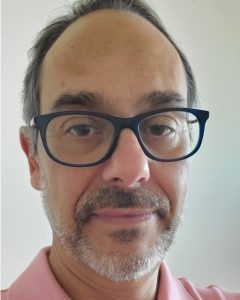
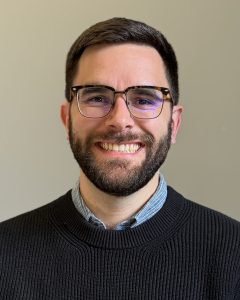
Luiz Pessoa1, Harrison Ritz2, 1 University of Maryland, 2 Queen's University
Abstract
Understanding macro-scale brain activity requires characterizing how information is encoded within brain areas, how information is exchanged between brain areas, and how encoding and connectivity change across contexts. While these pillars have historically been studied in isolation, state-space models (SSMs) offer a powerful framework for their unification. Although SSMs have seen growing popularity in computational systems neuroscience as probabilistic models of latent neural dynamics, their application to cognitive neuroscience is still in its infancy. In this keynote, we will show how SSMs can provide generative models of neural dynamics across diverse experimental paradigms. First, we will show the effectiveness of high-dimensional SSMs for comparing latent dynamics in epoched EEG experiments and recurrent neural networks. Second, in quasi-naturalistic fMRI paradigms, SSMs reveal how brain states evolve during threat processing. Third, when applied to resting-state fMRI, SSMs reveal that brain states bear many-to-many rather than one-to-one relationships with canonical functional connectivity networks. Together, these applications demonstrate how SSMs can offer a dynamics-first language for cognitive computational neuroscience.
Tutorial Outline
By the end of this tutorial, we want attendees to (1) appreciate the benefits and costs of state space modelling, (2) understand the mechanics of linear and switching SSMs, and (3) feel confident using standard packages in their own research. To be accessible to a broad audience, we will teach this tutorial on Google Colab using the Python package dynamax, while providing complementary materials in Julia and R (i.e., the Jupyter trifecta).
The tutorial will have three sections. Section 1 will introduce core statistical concepts for fitting SSMs: expectation maximization and Kalman filtering. Section 2 will reinforce the generative process from Section 1 by simulating a synthetic dataset from an SSM, and then recovering the parameters and latent dynamics from this ground-truth model. Section 3 will demonstrate how an SSM fitting procedure can be applied to empirical data. We will introduce the ‘Switching SSM’, explaining its generative process and potential use cases. We will then use Switching SSMs to model an open-access fMRI dataset. We hope that attendees will come away from this tutorial excited for how SSMs can open up new avenues for their research programs.
https://docs.google.com/document/d/13OJmOHRsFY67oVbDiH2QNyZuHok252ItNeRJoXwkJ_M