Community Event
Wednesday, August 5, 4:00 – 5:45 pm, Kimmel Center, Grand Hall
Naturalistic problem solving: theories, tasks, and methods

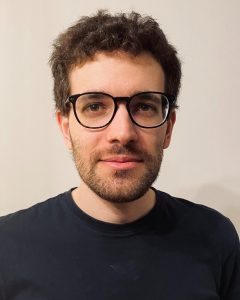




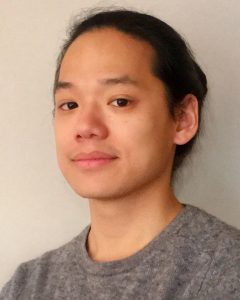
Shuze Liu1, David G. Nagy2, Hanqi Zhou2, Tracey Mills3, Tony Chen3, Zergham Ahmed1, Mark K. Ho4, 1 Harvard University, 2University of Tübingen, 3 MIT Brain and Cognitive Sciences Department, 4 New York University
Abstract
Real-world problems—such as starting a business, navigating interpersonal conflicts, or unclogging a sink—often involve many possible ways to understand the situation and many possible solutions. In contrast, traditional laboratory studies of problem solving typically rely on highly simplified and abstracted tasks. Such tasks may fail to elicit important features of real-world reasoning, such as how humans identify relevant information, generate solutions, or adapt strategies from past experience to new situations. This community event aims to bring together researchers in cognitive science, artificial intelligence, and related fields to critically examine the strengths and limitations of current approaches to studying naturalistic problem solving and map out directions for future work. The event will begin with a live demonstration of a challenging problem-solving task, accompanied by think-aloud protocols so that attendees can participate in observing the problem solving process as it unfolds. This demonstration will help ground two panel discussions: one on emerging theoretical frameworks for understanding naturalistic problem solving, and another on the experimental tasks and analytical methods best suited to studying it. Throughout the event, attendees will be encouraged to contribute questions and perspectives. By bringing together researchers from different disciplines, the event aims to spark discussion about new directions for studying complex, real-world problem solving.
Session Plan
Participants will gain a structured overview on how contemporary researchers study human problem solving beyond traditional laboratory settings. Classic theories have framed problem solving as search over well-defined representations of states, actions, and transitions, which has invited the widespread adoption of tightly controlled laboratory tasks. However, real-world problems are often ill-defined, with many potentially relevant features and no clear problem frame. The session will introduce emerging approaches that address this gap, including resource-rational models and on-demand construction of mental programs in cognitive science, alongside advances in machine learning such as world modeling, state abstraction, and option discovery. Attendees will come away with a clearer understanding of how these frameworks may help us capture flexible, real-world problem solving. In addition, participants will learn about key open questions and points of disagreement in the field, including differences in proposed algorithms, representations, and experimental paradigms. The session will highlight how recent advances in AI—particularly those enabling large-scale, naturalistic data collection—create new opportunities to study complex problem solving at scale. Overall, the event aims to clarify shared challenges, introduce novel frameworks and methodologies, and outline directions for a more unified research agenda on naturalistic problem solving.
For more information: https://framing-the-problem.github.io/
Please sign up to help us estimate attendance (walk-ins are also welcome) and to volunteer for the live problem-solving demonstration: https://forms.gle/gJWXqdxAPWfWjcSn8