Community Event
Wednesday, August 5, 4:00 – 5:45 pm, Skirball Theater
So You Have a Highly Predictive Model, Now What? Translating Neural Encoding Models into Scientific and Engineering Impact
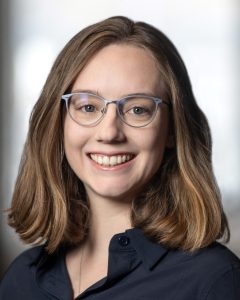
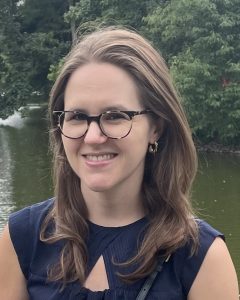

Organizers: Jenelle Feather1, Maggie Henderson1, Jacob Prince2, 1 Carnegie Mellon University, 2 Harvard University
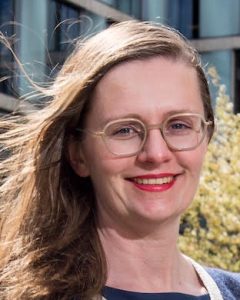
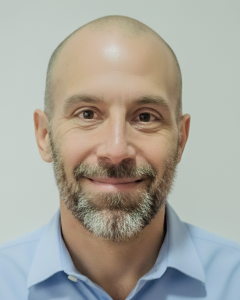

Event Speakers: Iris Groen1, Nicholas Lesica2, Thomas Naselaris3, Greta Tuckute4, Alex Williams5, Johannes Mehrer6, 1 University of Amsterdam, 2 University College London, 3 University of Minnesota, 4 Harvard University, 5 New York University, 6 EPFL
Abstract
“All models are wrong, but some are useful.” The field of cognitive computational neuroscience has focused intensely on addressing the first half of this aphorism, by compiling ever-larger neural and behavioral datasets and developing models that maximize predictive performance. But the second half is rarely formalized: what does it mean for a predictive model to be scientifically useful? As model performance saturates across many domains and modalities, and across diverse computational architectures, the field faces a key inflection point. How should we best utilize models once they are “good enough”?
This community event will focus on the scientific and engineering applications of highly predictive models. Speakers will present concrete examples of how encoding models have been used to support theory building, guide new experiments, implement causal interventions, or support translational engineering efforts such as BCIs and neural prosthetics. The discussion will then turn to a broader question: what infrastructure, benchmarks, and cultural norms does the field need to adopt in order to more effectively translate existing data and models into concrete scientific progress? By attempting to formalize what makes a predictive model useful, and articulating the set of pitfalls that currently impede that translation, this session aims to articulate a sharper roadmap for the next decade of modeling the brain.
Session Plan
The event will open with a broad introductory talk by the organizers on neural encoding models, shared methodological foundations, and the current state of the field, providing the background needed for CCN attendees to engage with the session discussions. The event will then transition to short talks by a range of speakers who have utilized encoding models of the brain for scientific or engineering applications, followed by a panel discussion. Talks will highlight results where the speakers leveraged an encoding model to obtain new scientific insight, or, to pursue a translational application. The event will conclude with a moderated panel discussion on the future of the field, the desiderata the community might adopt for models that support these applications, and how best to harness the datasets and models already available.
Short talk titles:
Iris Groen: Leveraging encoding models for scientific insight in human scene perception
Nicholas Lesica: Optimal hearing aid design through closed-loop neural restoration
Thomas Naselaris: Concept dose responses in human visual cortex
Greta Tuckute: Predicting, Controlling, and Interpreting Language Responses in the Human Brain
Alex Williams: Mechanistic Interpretability of Neurally Predictive Models
Johannes Mehrer: Toward model-guided visual prostheses and model-optimized dyslexia-friendly fonts