• Skip to main content
  • Skip to primary sidebar

Cognitive Computational Neuroscience

  • Home
    • CCN 2026 Organizers
    • Community Diversity, Equity, and Inclusion
    • Host a Future CCN Meeting
    • Privacy Policy
    • Code of Conduct
  • Account
    • Account Login
    • Create an Account
    • Account Home
  • Attend
    • Dates and Deadlines
    • Accommodations
    • Meeting Registration
    • Local Meetups
    • International Travelers
    • Travel Awards
    • Caregiver Awards
    • Local Food Options
    • Visit New York
    • Venue Information
  • Events
    • Schedule of Events
    • Community Events
    • Back2NY Event
    • Mind Matching
    • Community Networking Lunch
    • Transmitter Mentorship Program
    • Early-Career Faculty Social Lunch
    • Satellite Events
    • Social Event
    • Growing Up in Science
    • Distributed Bar Crawl
  • Presentations
    • Keynote Lectures
    • Keynotes & Tutorials
    • GACs
    • Contributed Talks
    • Poster Sessions
    • Search Papers
  • Submissions
    • Talk Presenter Instructions
    • Poster Presenter Instructions
    • Call for Papers
    • Call for Community Events
    • Call for GACs
    • Call for Keynotes & Tutorials
  • Sponsor
    • 2026 Sponsors
    • 2026 Exhibitors
    • Sponsorship Opportunities
  • Archive
    • CCN 2025
    • CCN 2024
    • CCN 2023
    • CCN 2022
    • CCN 2021
    • CCN 2020
    • CCN 2019
    • CCN 2018
    • CCN 2017
    • GACs
  • Contact Us

Event

Back2NY Event

Back2NY Event

Tuesday, August 4, 11:30 am – 12:30 pm, Skirball Theater

The first Cognitive Computational Neuroscience conference was hosted at Columbia in 2017. In 2026, we are back in New York and hosting a special event to look back at the community that has grown, discuss the progress and challenges we have faced, and consider where we want to go in the future.

CCN has never been afraid of trying new things, so the main component of the Back2NY Event will be a crowd-sourced panel discussion. Instead of a typical panel where a small number of speakers dominate the conversation, we want to give the entire community a chance to voice their perspectives.

Whether you are a first-time attendee, someone who “grew up” with CCN, or a founding organizer, we want to hear from you. Please fill out our community survey, composed of a few “report card” style questions, long-form prompts to drive debate, and a place to share your personal CCN stories.

The survey includes an option to indicate that you would like to participate in the live debate discussion, based on your responses to the survey. PLUS, we have a set of exciting prizes that we will give to randomly selected winners.
Take the Survey(opens in new tab)
Share Your CCN Photos(opens in new tab)

Venue Information

Venue Information

New York University

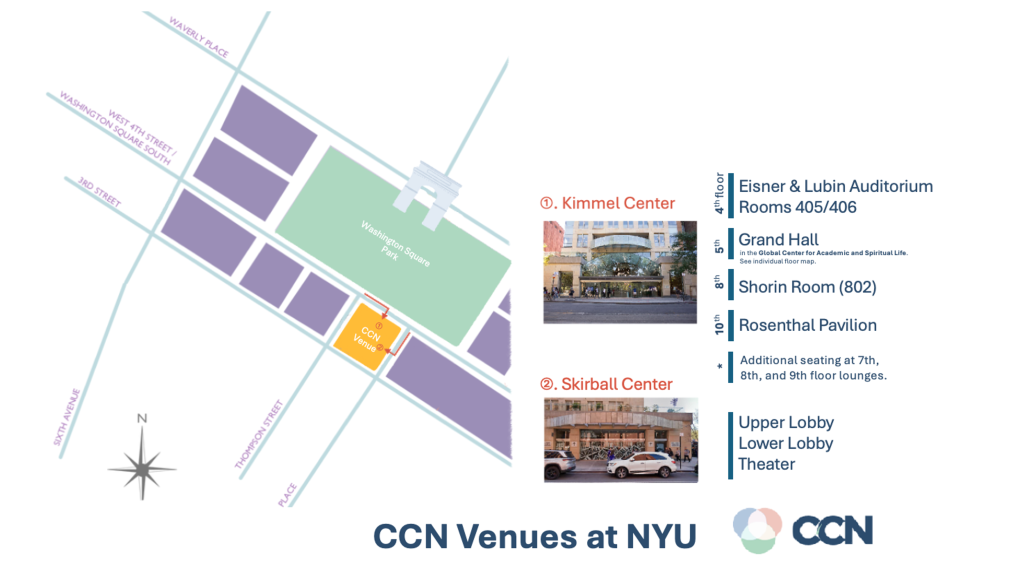
CCN 2026 will take place at NYU’s Washington Square campus in the heart of Greenwich Village, Manhattan. The conference will use two adjacent buildings:

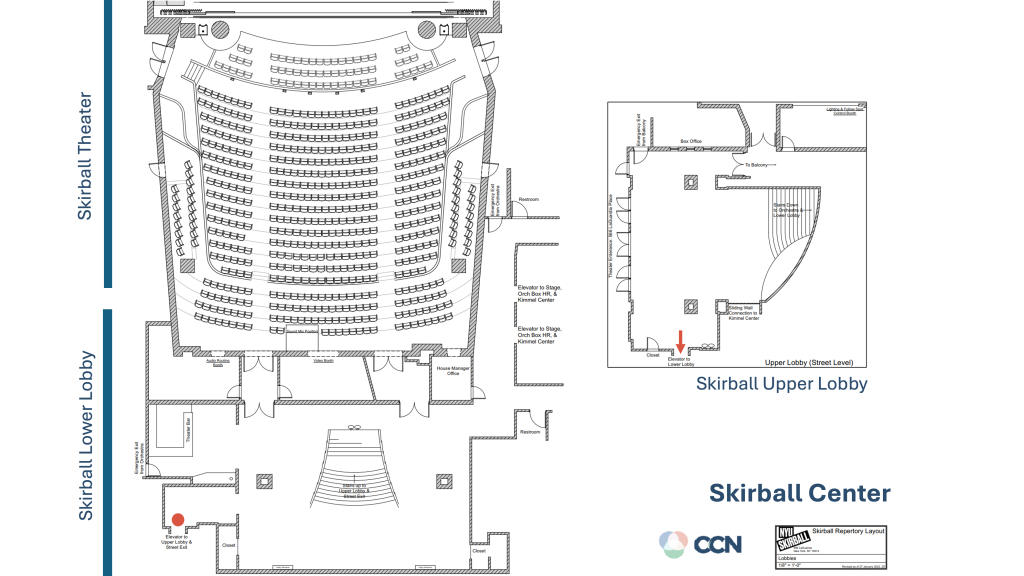
Skirball – The Jack H. Skirball Center for the Performing Arts will serve as the main theater for keynote lectures.

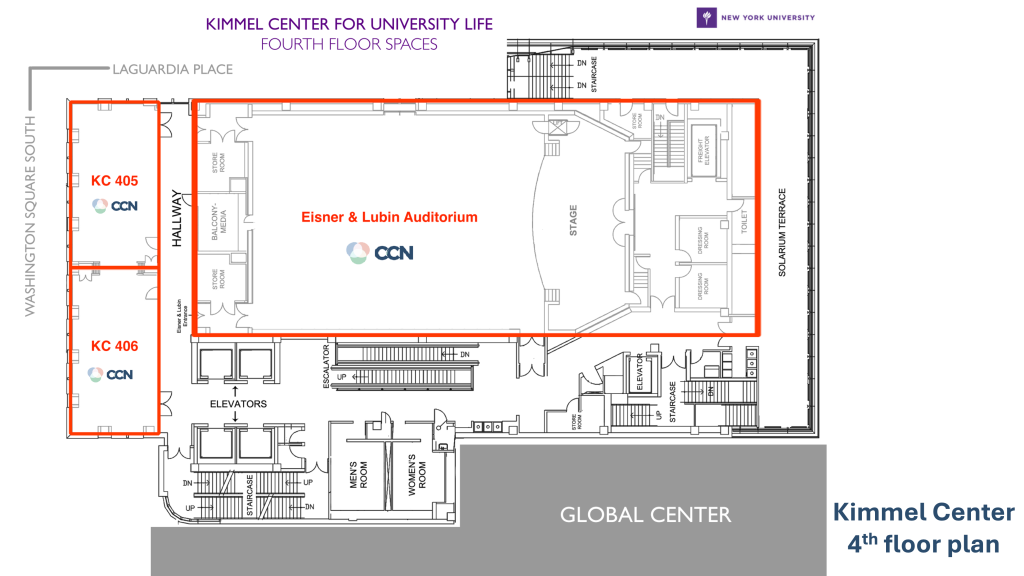
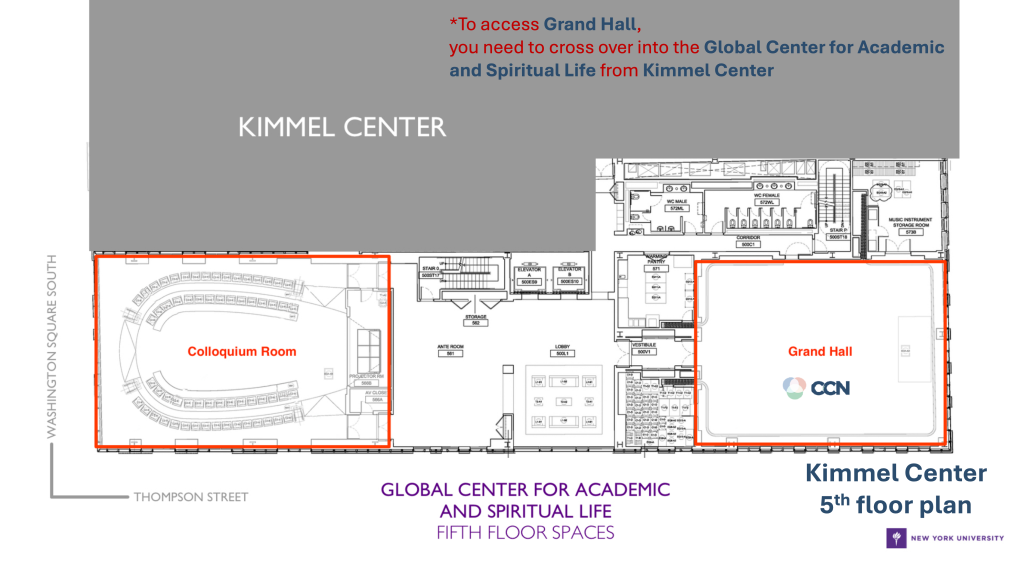
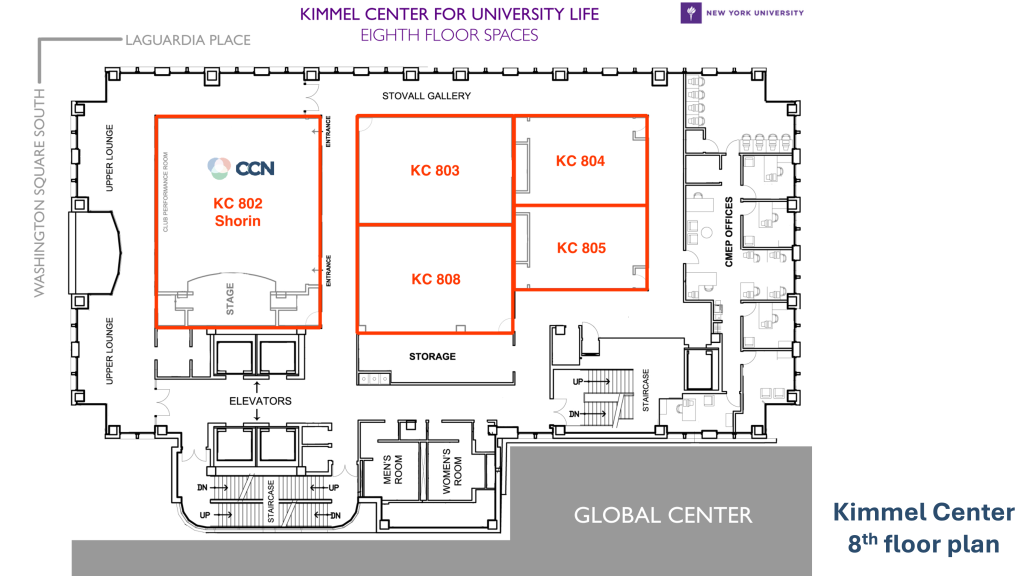
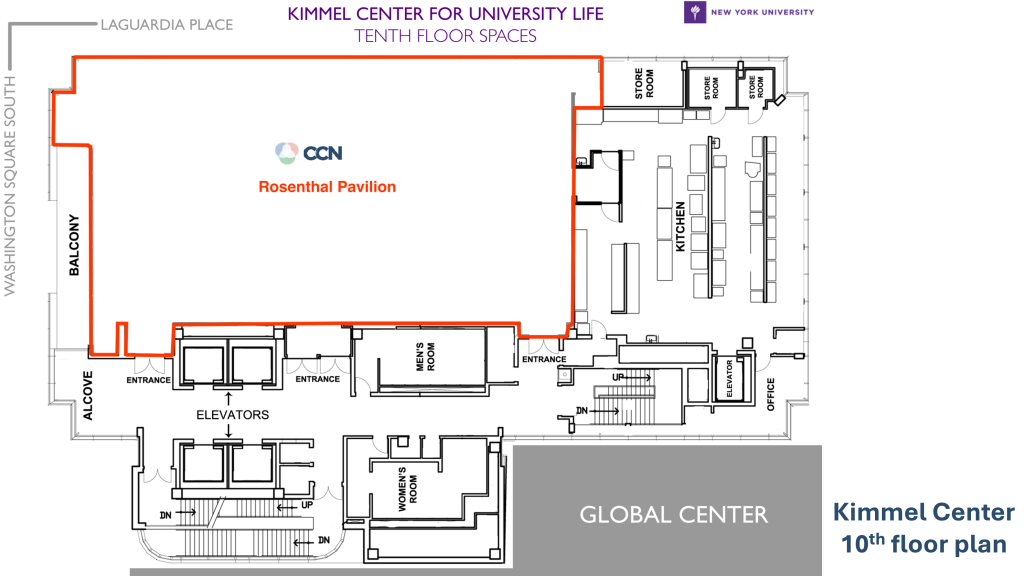
Kimmel – The Kimmel Center for University Life, located next door to Skirball, will host poster sessions, smaller lecture halls, and additional talk rooms.

Note: Skirball and Kimmel Center are right next to each other, so moving between keynotes, talks, and poster sessions is quick and easy.

Getting to the Venue

The closest subway station is West 4th St–Washington Sq, served by the A, C, E, B, D, F, and M trains. The Skirball Center is a 5 - 7 minute walk from the station.

Getting Around NYC

Subway & Buses

The NYC subway runs 24/7—one of only a few transit systems in the world that does! You can use contactless payment (credit/debit card or phone) on all subways and buses via the OMNY tap-to-pay system. The standard subway fare is $3.00 per ride. For trip planning, we recommend the Citymapper app. Allow extra travel time during rush hours (7–10 AM and 4–7 PM).

Getting To & From Airports

JFK

  • Yellow cab: fixed fare (~$70)
  • LIRR to Penn Station: get tickets on the TrainTime app
  • Subway: E line from Jamaica Station or A line from Howard Beach Station
  • Click here for car rental information for John F. Kennedy International Airport.

Newark (EWR)

  • NJ Transit train to Penn Station: get tickets through the NJ Transit app
  • Click here for car rental information for Newark Liberty International Airport.

LaGuardia (LGA)

  • Public transport via bus
  • Drive time: ~45 minutes
  • Click here for car rental information for LaGuardia Airport.

Other Transportation Resources

  • A Comprehensive Guide to NYC Transportation
  • Getting to NYC
  • Getting Around NYC
  • NYC Accessibility Information

Venue Maps

CCN Venues at NYU

Skirball Center

Kimmel Fourth Floor

Kimmel Fifth Floor

Kimmel Eighth Floor

Kimmel Tenth Floor

Social Event

Social Event

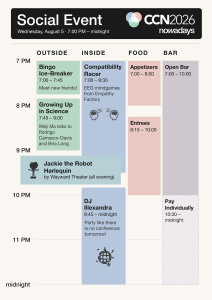
Wednesday, August 5, 7:00 – 11:59 pm, Offsite - Nowadays

Cost: $55

Please join us for this year's CCN social event at Nowadays—a renowned Brooklyn destination featuring a lush outdoor garden and one of the most acclaimed sound systems in the city.

Enjoy an open bar, food, Bingo Ice Breaker, Jackie the Robot Harlequin, EEG mindgames, Growing Up in Science, and a DJ to keep you dancing into the night.


Address: 56-06 Cooper Ave, Ridgewood, NY 11385

Schedule

Getting There

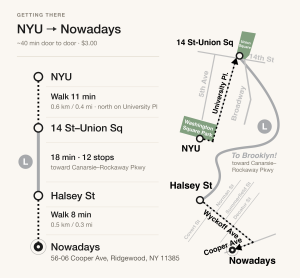
To get to Nowadays from Skirball (NYU), walk north on University Pl until you hit 14th street. Then take the L train from 14 St-Union Sq towards Canarsie-Rockaway Pkwy until Halsey St (12 stops). After emerging from the subway station, walk south on Wyckoff Ave, take a right onto Cooper Ave, and walk for 40 more seconds—the venue will be on your left.

Networking Lunch

Community Networking Lunch

Tuesday, August 4, 12:30 – 2:00 pm, Kimmel Center, Eisner & Lubin Auditorium

Registration Required

Join us for a discussion-driven lunch focused on the future of our scientific community!

We will encourage participants to identify specific topics they would like to strategize around (e.g., career development and the job market; diversity, inclusion, and social challenges; science policy and public engagement; research fields and future directions). Participants will then break into small groups to discuss these topics, brainstorm potential solutions, and share their insights with the larger group.

Before the event, we will reach out to participants to request relevant topics to discuss.

Please register to attend the lunch in your CCN account. Space is limited, so if you are not among the initial registered attendees, you will be placed on a waitlist. We recommend that those attending arrive on time as we will start accepting people from the waitlist shortly after the lunch starts. Once you've registered, if you are no longer able to participate, kindly let us know as soon as possible so we can offer your spot to the next person on the list.

Mind Matching

Mind Matching

Monday, August 3, 10:00 – 11:15 am, Kimmel Center, Eisner & Lubin Auditorium

CCN 2026 is once again partnering with Neuromatch to offer Mind Matching, a structured networking event designed to help conference attendees forge new collaborations and connections. Taking place Monday, August 3,10:00 - 11:15 am, in Eisner & Lubin, Kimmel Center, the event gives participants the chance to engage in a series of small group conversations over the course of an hour — a great way to kick off the conference!

To make matches as meaningful as possible, Neuromatch uses a proprietary machine learning and semantic processing approach that analyzes your publications and research interests to identify your most compatible scientific peers. Registration is required to participate, and your personalized matches will be waiting for you when you pick up your badge on site. More details about the matching process can be found on the Neuromatch website. If you would like to participate in this Mind Matching opportunity, please register.

The Registration Form is now live. Registration closes July 15, 2026.

Call for Papers

Call for Papers

8-page Paper Submissions open January 5.
The deadline for 8-page Abstracts is February 9 and the deadline for 8-page Full Papers is February 12.

2-page Paper Submissions open March 2.
The deadline for 2-page submissions is April 2.

See the Complete Submission Guidelines.

Two-track submission system

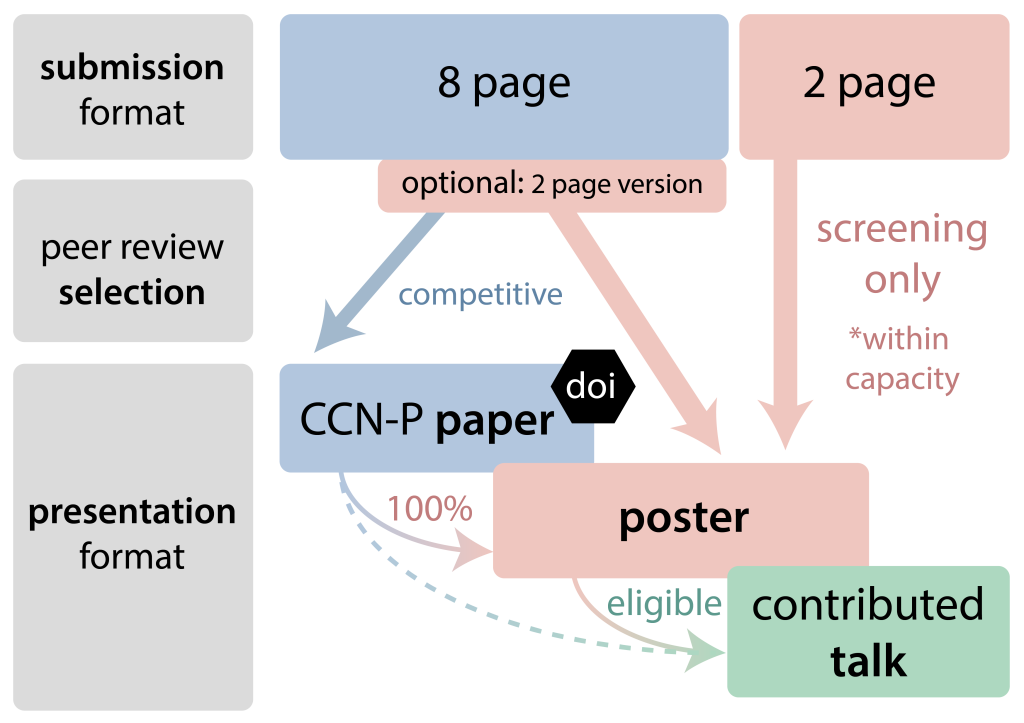
CCN 2026 will, once again, offer two submission tracks: 2-page Extended Abstracts (“2-pagers”) and 8-page Full Conference Papers (“8-pagers”). OpenReview will serve as the platform for submission of both types. 

2-pagers that align with the conference scope will generally be accepted, up to a maximum poster capacity. Accepted 2-pagers will be accessible through OpenReview

8-pagers will undergo competitive selection. Accepted papers will be published in the CCN Proceedings (CCN-P) with DOI assignment on OpenReview. You can view the CCN-P papers from 2025 in OpenReview. Authors of 8-pagers will have the option to submit a 2-page version of their work for consideration as a poster. Contributed talks will be selected from both accepted 8-pagers and 2-pagers, including the 8-pagers rerouted to 2-pagers

Figure 1. Submission Pathways for CCN 2026. The conference now offers two parallel tracks for submissions. The traditional extended abstract track (right) accepts 2-page submissions that meet scope and quality requirements for poster presentation, and are eligible for oral presentation selection. The new conference proceedings track (left) accepts 8-page submissions and implements a competitive acceptance rate, with accepted papers published with DOI in CCN Proceedings (CCN-P). All accepted papers in both tracks receive a poster presentation and are eligible for Contributed Talk selection. Submissions rejected by the CCN-P track are rerouted to the 2-page submission track for an acceptance decision (with another chance for oral presentation). 

Background on CCN's Conference Proceedings track

The introduction of a conference proceedings track is a response to our research community's needs. Traditional academic journals, while important for feedback and quality control, also introduce challenges including high costs and often lengthy publication timelines. While journals like PLoS Computational Biology, Cognitive Science, and eLife already offer some relief with lower costs of publishing and gold open access, machine learning conferences such as NeurIPS, ICLR, and ICML also demonstrate how conference proceedings with high peer review standards can foster rapid, affordable, and high-quality scientific communication.

CCN covers research at the intersection of AI, Neuroscience, and Cognitive Science. This convergence of fields presents a unique challenge and an opportunity to adopt publishing formats that resonate with researchers across these domains. We anticipate that the introduction of a long-form conference proceedings track, a format that has proven successful in the computer science and cognitive science communities, will benefit a substantial part of the researchers working at the intersection of these diverse fields. There is a lot of excitement and energy in the community, and we believe this new format will help us to, together, reach a higher standard of reviewing and editorial decisions, which will empower and democratize the CCN community.

In making this change, we've been careful to preserve what already works well. The traditional poster track, with its 2-page abstracts, remains unchanged, except that we will not be assigning DOIs to them. Parallel submission to other venues is allowed. This ensures that our existing community members continue to have the same opportunities for presentation and scientific exchange that have made CCN a valuable venue. The new proceedings track, therefore, complements but does not replace our established format, thereby enriching the conference's ability to serve our evolving research community.

Community Diversity, Equity, and Inclusion

Community Diversity, Equity, and Inclusion

The open exchange of ideas, the freedom of thought and expression, and respectful scientific debate are central to the goals of CCN; this requires a community and an environment that recognizes and respects the inherent worth of every person. As a community, we welcome scientists from all around the world. We acknowledge that each of us may hold diverse intersecting identities, including but not limited to training, expertise, gender, race, nationality, ethnicity, geographic location, sexual orientation, age, religion, neurodiversity and disability status. We are aware that our identities influence how we engage in scientific exchange. We hold the obligation to build an environment that fosters respectful scientific exchange for all. We are committed to taking actions that facilitate the participation and belonging of all individuals in scientific exchange, at all levels of the conference. We firmly believe that this commitment will both strengthen our community and improve our science. And we pledge to create a responsive culture and to address harms and inequalities if they occur. If you have concerns related to your participation at CCN, or observe someone else’s difficulties, or have any other concerns related to inclusion, please contact the organizers.

Current Initiatives

The CCN DEI Committee, established in 2024, works year-round to develop and sustain initiatives that strengthen our community. In 2026, our focus is on building a structured DEI program that complements the scientific program by creating opportunities for researchers at all career stages to connect, learn from one another, and foster a welcoming, inclusive conference environment. Ongoing efforts include:

Continuing Community Initiatives

Several initiatives have become valued traditions at CCN and continue to support a more accessible, inclusive, and connected conference experience.

Travel Awards

First introduced in 2025, the Community Travel Awards provide $500 to researchers facing personal, financial, regional, or societal barriers to attending CCN. These awards help broaden participation and support a more globally representative conference community. Travel Awards 2026 are sponsored by Natural & Artificial Minds at Princeton University.

Caregiver Awards

CCN continues to offer $500 Caregiver Awards to help attendees offset caregiving expenses incurred during the conference, such as childcare or babysitting services. By reducing practical barriers to attendance, these awards help make participation more accessible for researchers with caregiving responsibilities. Caregiver Awards 2026 are sponsored by Natural & Artificial Minds at Princeton University.

Community Networking Lunch

A longstanding and beloved CCN tradition, the annual Community Networking Lunch provides an informal and welcoming space for attendees to discuss the future of our community, exchange ideas, and reflect on how we can continue building a more inclusive scientific environment.

Public Conference Talks

To extend the reach of the conference and improve accessibility, CCN continues to make conference talks publicly available through our YouTube channel after the meeting.

New for CCN 2026

Mentorship Program

With the generous support of The Transmitter, CCN is launching its inaugural mentorship program, connecting early- and mid-career researchers with experienced mentors to support career development both within and beyond academia. The first cohort includes 30 mentees matched with 15 mentors, with priority given to researchers navigating career transitions. The year-long program begins with a launch lunch at CCN 2026.

Growing Up in Science

The popular Growing Up in Science returns to CCN for the first time in New York, co-organized with Weiji. Two early-career researchers will share their personal journeys through science, reflecting on both the successes and challenges of research careers. By encouraging honest conversations, the event aims to foster connection, resilience, and a stronger sense of community.

Early-Career Faculty Social Lunch

New in 2026, this informal lunch brings together early-career faculty to meet peers, exchange experiences, discuss shared challenges, and build lasting professional networks.

Transparency in Conference Policies

Working closely with the Program Committee, we have further developed the conference talk selection process to promote fairness and transparency. For CCN 2026, we will also publish conference transparency and inclusivity metrics, providing greater insight into our ongoing efforts to build an equitable and representative scientific meeting.

Call for GACs

Call for GACs

Submissions of GACs are Closed.

Submission Deadline: Tuesday, March 31, 2026

What are the most exciting challenges in cognitive computational neuroscience and how might we solve them together? CCN will again be promoting Generative Adversarial Collaborations (GACs). The goal of a GAC is to make concrete plans to address important debates in our field -- and then to begin implementing these plans. CCN will prominently host GAC kickoff workshops during the annual meeting.

Please find more information about the GAC project and what we are looking for here.

What is a GAC?

A Generative Adversarial Collaboration (GAC) is a structured collaboration that brings together scientists with competing viewpoints to jointly design research that can resolve important debates in cognitive computational neuroscience. Unlike traditional symposia, GACs are specifically designed around a debate format where participants with opposing theoretical perspectives work together to create concrete experimental or theoretical proposals that can arbitrate between their positions. The unique "generative" aspect ensures tangible outcomes: all GAC teams commit to writing a position paper, and are given a guaranteed publication slot in the Neurons, Behavior, Data analysis, and Theory (NBDT) journal. The "adversarial" component refers to the competition between theories while "collaboration" emphasizes the cooperative spirit in which participants work together to advance the field. GAC workshops are highly interactive events at CCN that engage the broader community through debate, commentary, and collective problem-solving.

Not sure if you should submit a Community Event or GAC?

The key distinction lies in whether your topic centers on competing hypotheses or theories. Submit a GAC if you have clearly defined, interestingly competing viewpoints that people in the field actively debate: for instance, opposing theories about neural mechanisms, conflicting interpretations of empirical findings, or incompatible computational frameworks. Your GAC should present these perspectives in tension and propose ways to resolve them. Submit a Community Event if your topic is one where most attendees would generally agree on the fundamentals, and your goal is to encourage community engagement or discussion around a broadly relevant issue (such as open science practices, career development, new benchmarking challenges, or traditional symposium-style presentations on topics without competing hypotheses). GACs always entail a follow-up position paper within a special issue of NBDT. Community Events do not have to be accompanied by a paper. New in 2026 - we now also offer the option for Community Events to publish a position paper in NBDT. See Call for Community Events.

Application Details

The GAC application should be a single PDF (2 pages maximum) that includes the following sections:

  • Title: Should clearly communicate the scientific challenge or controversy.
  • Short Description: A brief (1 paragraph) summary of the GAC's question, approach, and the organizing team.
  • Scientific Question and Background: State the empirical or theoretical question, and describe current evidence to lay the foundation for the question at hand.
  • Challenge or Controversy: Clearly outline what the contentious issue or open question is in the field and where it stems from.
  • Competing Hypotheses and Proposed Approach for Resolution: Present the alternative hypotheses and how you plan to address the question over the coming year or so.
  • Concrete Outcomes: Describe outcomes that could be achieved in the next 5-10 years or so, and if possible, outline a plan to achieve those outcomes.
  • Benefit to the Community: Explain how the GAC will benefit the community beyond the scientific knowledge itself, including consideration of relevance to the full CCN community and beyond.
  • Team and Roles: List a core group (at least 2 committed collaborators with opposing viewpoints). All speakers for the GAC are expected to attend CCN 2026 in person. For each team member who is expected to present at the GAC, please state whether they commit to attend the GAC kickoff workshop in person; we ask that individuals not commit unless they are certain they can attend. Teams may include additional organizers  who cannot attend in person but will contribute significantly at the proposal and post-workshop stages. Proposals should clearly define roles for each member (1-2 sentences each). This can include: senior thought leaders in these areas, ideally for advisory positions; junior group leaders and postdocs who are likely to lead experiments or develop new theories resulting from the GAC process. Both theorists and experimentalists are welcome. At least one group member (maximum two) should be listed as the primary contact for coordinating the paper publication. This person can be, but is not necessarily, a GAC speaker (for instance, many of the most successful GACs had graduate students or post docs who took charge of putting together the paper drafts).  Submissions are encouraged to include an optional statement on additional diversity criteria (e.g., gender, seniority).
  • Plan for the GAC Kickoff Workshop: Clearly outline how you plan to structure the kickoff workshop (15 minute presentation introducing the GAC to all CCN participants, plus 1:45 hour break out sessions for individual GACs). Given time constraints, we encourage teams to also engage the community asynchronously (e.g., Twitter/X polls, Slido, online discussions); please describe any such plans. Include how you would measure impact and community engagement of your GAC.  In addition, propose a "back-up plan" whereby if a member of the team is unable to attend in person due to unforeseen circumstances, the team is committed to replacing that individual with someone who can discuss the same topic, and whose inclusion does not impact the quality of the panel or skew the diversity of the group.
  • Commitment: Include statements of commitment to the broader GAC process by each core member of the team.
  • References: Can exceed the 2-page limit if necessary.

Submission Method

As part of the submission process, you will upload a single PDF file that should not exceed two pages in length. You will need to have the email addresses of all co-applicants that are part of the proposal. By typing their names you confirm that everyone is willingly part of this proposal application, and we will email confirmation to all co-applicants.

Questions?

Email us .

Call for Community Events

Call for Community Events

Submissions of Community Events are Closed.

Submission Deadline: Tuesday, March 31, 2026

Submit your idea for an event that ignites curiosity, fosters connections, and tackles topics that are of high relevance to the field, albeit not necessarily about cognitive computational neuroscience per se (e.g., topics including, but not limited to, open science, climate, career and culture will be considered, along with science-related topics like new benchmarking challenges or hackathons). We encourage submissions with novel or unusual formats. Think beyond traditional presentations: propose interactive round tables, collaborative hackathons, competitions, chalk talks, or something else.

  • A Community Event can be between 45 and 90 minutes in length.
  • The target audience should be a sizable proportion of CCN attendees, from MS & PhD students, to postdocs and PIs.
  • Participation should not require special knowledge that isn’t widely represented in the community. Events should aim to be inclusive and interesting to a wide audience.
  • Not sure if your proposal is a better fit for a GAC? Have a look at how these two event types differ.

Application Details

Applications can be made either by individuals or groups.

A submission should be a single PDF with a 2-page limit that includes:

  • Title If selected, this is the title that will be announced in the program. Please consider this in selecting a title and aim to avoid titles that are too vague or too niche.
  • Abstract (1-2 paragraphs): If selected, this abstract will be used to announce your community event. Please keep this in mind as you prepare your abstract, as not everyone at CCN will be an expert in your field. A succinct abstract that clearly states the research problems and approach can help get the CCN community excited about your event.
  • Outline (1-3 paragraphs), in narrative form, explaining what the event will look like, and what its main learning goals are.
  • Audience and Accessibility (1-3 Paragraphs): details about for whom this event will be most useful and how you plan to make it interesting, how many attendees the format would be for, and what background knowledge is required or helpful.
  • Requirements Everything you’d need from CCN: room size and setup (lecture hall, small tables,...), AV requirements etc.
  • List of Organizers A list of people involved, their roles, and confirmation that each person will attend CCN 2026 in person. Describe the background of people involved and their expertise in the relevant area. Include a reference to relevant publications. We encourage submissions that represent a diversity of institutions. Submissions should also include a statement on additional diversity criteria (e.g., gender, seniority). These will be considered during the selection stage. Please note that all speakers are required to register for the conference.
  • Position paper: Similar to GACs, community events can now also publish a position paper in NBDT. This is completely optional. In case you wish to publish such a position paper after CCN 2026 in NBDT, please state this in your proposal.
  • A Link (if available) to previously given tutorials or similar teaching presentations or recordings.

Submission Method

As part of the submission process, you will upload a single PDF file that should not exceed two pages in length. You will need to have the email addresses of all co-applicants that are part of the proposal. By typing their names you confirm that everyone is willingly part of this proposal application, and we will email confirmation to all co-applicants.

Selection Process

The program committee will select a limited number of submissions (usually 1-2) for presentation at the conference and results will be announced mid April.

Questions?

Email us .

Call for Keynotes & Tutorials

Call for Keynotes & Tutorials

Submissions of Keynotes & Tutorials are Closed.

Submission Deadline: Tuesday, March 31, 2026

This innovative format began in 2021, and we are excited to continue this series. Each keynote talk will be accompanied by a data/code tutorial to give attendees a hands-on look at the results. The goal of these tutorials is to give the audience a look “under the hood”, highlighting scientific assumptions, interpretations, open questions, analysis tricks, etc. The tutorial should be hands-on and enable the audience to carry out new analyses. In order to democratize the speaker selection process, we are inviting research teams to submit proposals via an open call.

FAQs

  • What is the format of the event and how long will it be?
    • The event should consist of a 30-minute keynote talk, plus a short Q&A, followed by a 1-hour 45-minute tutorial.
    • Based on feedback from prior conferences, we are requiring all presenters to attend in person.
  • Who should present?
    • Typically, a faculty member or research group leader gives the Keynote talk, and the collaborator(s)/co-author(s) (e.g., a postdoc or graduate student) leads the tutorial.
  • What are the tutorial requirements?
    • The coding platform and data should be open source / open access and require minimal or no prior installations. (Google Colab is a nice tool for this.) The tutorial should also be accessible to a range of ability levels, and go at a pace that allows the audience to follow along. The tutorial should not simply be a demo, but instead have a hands-on component where participants have to think about and implement code themselves.
    • Target audience should be MS & PhD students + postdocs with coding background, but you should not expect everybody to be intimately familiar with the packages you are using.
    • Often, tutorials tend to overestimate the volume of material that can be covered. It’s better to have the tutorial be too short than too packed!

Application Content

Applications should be a single PDF submission with a 2-page limit that includes:

  • Talk title
    • If selected, this is the title that will be announced in the program. Please consider this in selecting a title and aim to avoid titles that are too vague or too niche.
  • Talk abstract (1-2 paragraphs)
    • If selected, this abstract will be used to announce your talk. Please keep this in mind as you prepare your abstract, as not everyone at CCN will be an expert in your field. A succinct abstract that clearly states the research problems and approach can help get the CCN community excited about your talk.
  • Tutorial outline (1-3 paragraphs), in narrative form, including
    • What are the learning goals for the tutorial?
    • For whom will this tutorial be most useful? What background knowledge or skills will help audience members get the most out of the tutorial?
    • A description of the tutorial plans (including hands-on exercises) and rough schedule
    • Tutorial programming language and suggested platform/environment
    • Please also include details about how you plan to ensure it is accessible to a broad CCN audience.
  • Speaker information
    • A list of people involved, their roles, and confirmation that each person will attend CCN 2026 in person. Describe the background of people involved and their expertise in the relevant area. Include a reference to relevant publications. Submissions are encouraged to include an optional statement on additional diversity criteria (e.g., gender, seniority).  These may be considered during the selection stage.
    • A link to previously given tutorials or similar teaching presentations or recordings if available.
    • Please note that all speakers are required to register for the conference.

Submission Method

As part of the submission process, you will upload a single PDF file that should not exceed two pages in length. You will need to have the email addresses of all co-applicants that are part of the proposal. By typing their names you confirm that everyone is willingly part of this proposal application, and we will email confirmation to all co-applicants.

Questions?

Email us .

Primary Sidebar

News

Submission of Papers will open February 15.

Copyright 2026 CCN  Contact us at